NICU SUPPORT IN HONG KONG: ADVICE FOR PARENTS FROM PARENTS

If your baby is receiving care in a neonatal intensive care unit (NICU) in Hong Kong, the first days and weeks can feel overwhelming.
Instead of settling into life at home, you may be navigating hospital visits, medical updates, unfamiliar equipment and difficult decisions while recovering from birth yourself. The NICU can feel frightening and unfamiliar, particularly when your baby needs specialist care and you are still processing your own birth experience.
This September, we asked parents in the BUMP&CO community to share the advice they would give to another parent whose baby may need specialist neonatal care after birth.
Their experiences were different, but the message was consistent: ask questions, accept support, take things one day at a time and remember that you are still your baby’s parent every step of the way.
The experiences in this article were shared by members of the BUMP&CO NICU Support Whatsapp community. Some details have been edited for length and privacy.
Take care of yourself and reach out for support
“This is not the birth or start to parenthood you had hoped for,” one parent shared, “and it is normal to feel a range of emotions because of this. But know you’re not alone.”
You may feel frightened, heartbroken, angry, guilty, numb or completely overwhelmed. You may feel grateful for the care your baby is receiving and still find the experience incredibly hard. All of these feelings can exist together.
Try to reach out to people you trust. Let someone bring you food, make phone calls, update relatives or sit with you while you rest. If you are recovering from birth complications or a caesarean, remember that your own body also needs care and attention.
You do not have to be strong every minute. You do not have to process everything immediately. You are going through something huge, and support is not a luxury.
If your feelings become overwhelming or you are struggling to cope, speak to your doctor, midwife, hospital social worker or a mental-health professional. You deserve support with your emotional recovery as well as your baby’s medical care.
Keep your own medical log
“Write down the updates the doctors provide you,” a parent advised, “and request they give you an update if they don’t.”
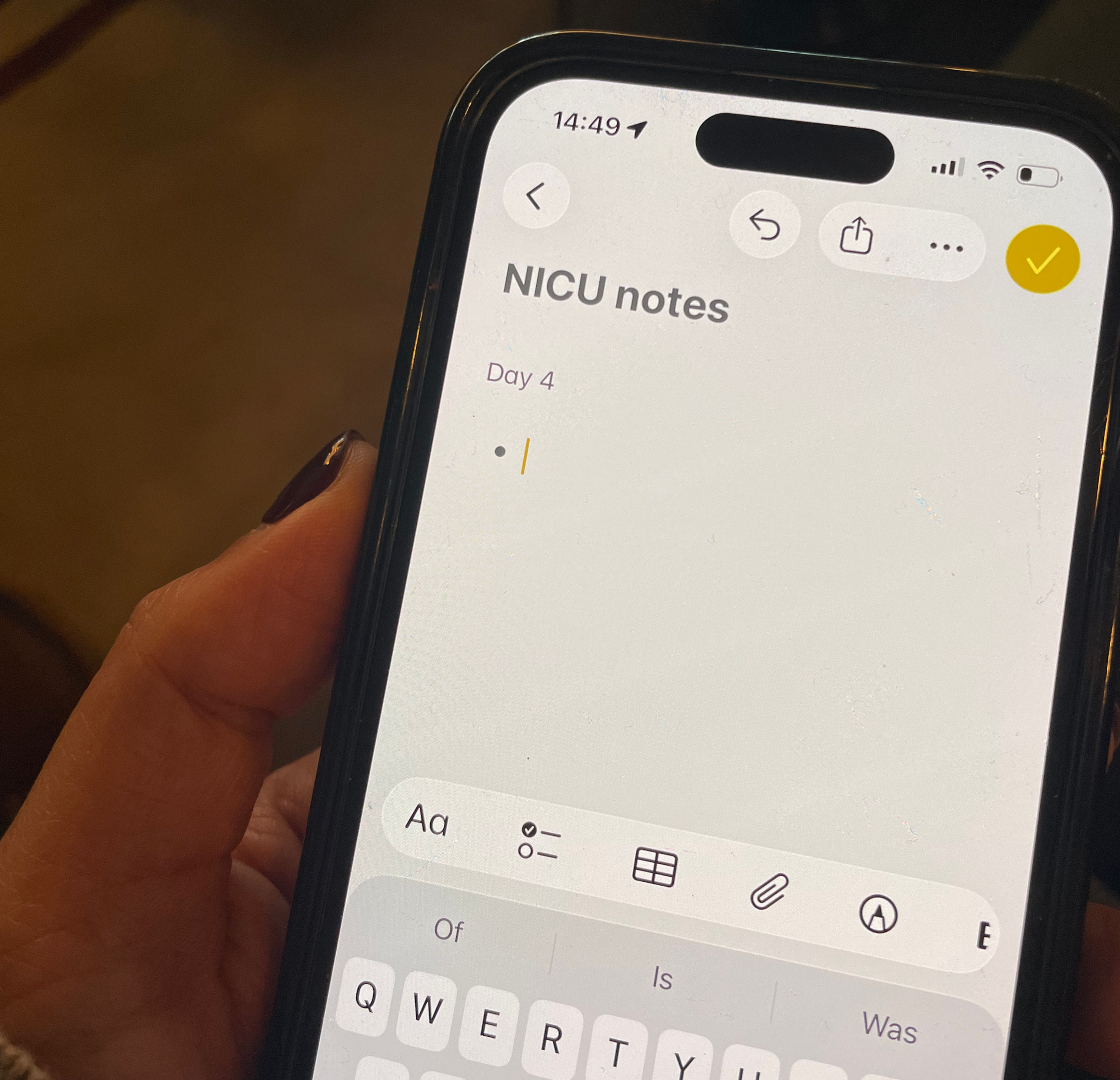
Doctors and nurses change regularly, and it can sometimes feel as though information gets missed between shifts. Keeping your own notes can help you remember what you have been told and keep track of questions you want to ask.
You might record:
Your baby’s latest weight and measurements.
Feeding progress and changes to feeding plans.
New medicines, including their names, dosages and purpose.
Test results and procedures.
Questions for the next medical update.
Small milestones, such as a first cuddle, feed or move to a different type of care.
It is okay to question things and ask for follow-ups. If you do not understand something, ask for it to be explained again. If you are too tired or distressed to take everything in, ask your partner or support person to write things down too.
It is also completely okay to ask the same question multiple times. NICU information can be complex, and you are learning while under enormous emotional pressure.
Be your baby’s advocate
“Advocate for your babies—speak up when things don’t feel right,” one parent shared.
You know your baby, and you are an important member of their care team. Being an advocate does not mean challenging every decision or assuming something is wrong. It means making sure you understand what is happening and feel able to participate in conversations about your baby’s care.
You can ask:
What is this medicine for?
What is the dosage and how often is it given?
What are the benefits and possible side effects?
What are we waiting for before the next step?
What would indicate that the plan needs to change?
Who should we speak to if we have concerns?
One parent explained that speaking up helped prevent their babies from being over-medicated or fasted unnecessarily, and ensured that their son’s surgery was carried out in time.
If you are worried, ask. If you need more information, ask. If you want to understand the options, ask.
Get some rest
“You are going through something huge,” one parent reminded others. “So sleep when you can.”
Rest can feel impossible when your baby is in NICU. You may feel that every minute away from the unit is time you should be spending beside them. But caring for yourself is not abandoning your baby. You need support and rest to get through what may be a long and exhausting experience.
If it is possible, take a night off from the NICU or share the visiting responsibilities with your partner. Eat something nourishing, take a shower, go for a walk or simply lie down.
One parent suggested connecting with your partner and making space for each other, even during a very difficult period. You do not have to experience the journey in exactly the same way, and both of you may need different kinds of support.

Bring toys and books
“Bring toys and books. Read to your little one. Let them hear your voice.”
Even when your baby is surrounded by wires, tubes and monitors, you are still their parent. Your voice and presence can help you begin to build your relationship during an unfamiliar start.
If the medical team says it is safe, ask about:
Reading to your baby.
Talking or singing to them.
Bringing a small book or familiar comfort item.
Touching or gently placing your hand on them.
Helping with nappy changes or feeds.
Your baby may not be ready to be held immediately, and there may be times when medical care needs to come first. That does not mean you are missing your chance to bond. Ask the nurses what is possible today, and remember that small moments count.
Ask for skin-to-skin
“Ask for skin-to-skin,” one parent recommended. “They might need to help with cables and other equipment, but the nurses encourage this.”
Skin-to-skin contact may not be possible immediately for every baby, and it will depend on your baby’s medical condition and the NICU’s guidance. When it is safe, the nurses can help you position your baby and manage the cables, tubes and monitors.
If holding your baby is not yet possible, ask whether you can provide gentle touch or place a hand over them. You can also ask how to be involved in other aspects of their care.
There is no single right way to bond with your baby in NICU. Your voice, touch, scent and presence can all help you feel connected while you wait for the next step.
Don’t be afraid of the beeps and buzzing
“Don’t be afraid of all the beeps and buzzing,” one parent shared. “It’s also okay if you do develop some anxiety around these.”
The sounds of the NICU can be intimidating at first. Over time, you may begin to recognise which sounds need immediate attention and which are part of routine monitoring. The nurses can explain what different alarms mean, so do not hesitate to ask.
It is also normal to feel anxious around the sounds. Some parents find that, once their baby no longer needs monitors, the silence can feel unsettling because the alarms had become part of their sense of security.
If you find that anxiety continues to feel intense, speak to your doctor, nurse or mental-health professional. You deserve support with your emotional recovery as well as your baby’s medical care.

Ask about visiting and seeing your baby
“While you’re still in hospital, push to see your little one,” one parent advised. “You don’t have to wait until visiting hours for the maternity ward. There should be ward staff who can take you to the NICU.”
Visiting arrangements vary between hospitals and may depend on your recovery, your baby’s condition and the unit’s policies. Ask the maternity and NICU teams what is possible for you.
If you are recovering from birth complications, you may need help getting to the unit or may not be able to visit as often as you wish. This does not make you a less loving or involved parent. Your recovery matters too.
The NICU staff can explain how you can stay connected when you cannot be there in person. This might include talking to your baby, expressing milk, providing touch or asking your partner to share updates and photographs.
Prepare for progress that is not linear
One parent, whose second twin spent four weeks in NICU, remembered a conversation with a nurse during the first week.
“A very kind nurse saw how upset I was getting whenever a doctor gave me an update that didn’t match what I’d hoped to hear. She told me that when babies are so tiny, most of the time their recovery is not linear—it’s two steps forward, one step back.”
The parent found this comforting because it helped reset their expectations and patience for the rest of their baby’s NICU journey.
A difficult day does not erase the progress that came before it. There may be improvements, setbacks and periods where it feels as though nothing is changing. Try to focus on the day in front of you rather than expecting a straight line towards discharge.
Focus on today, not the timeline
“Focus on the day in front of you. Try to avoid thinking about timelines.”
A NICU journey can make people focus on one question: when is my baby coming home? But discharge depends on many factors, and plans can change.
One parent suggested asking family and friends not to keep asking when the baby will be discharged. Well-meaning people may not know what to say, but answering the same question repeatedly can feel exhausting.
You could say:
“We’re focusing on today and will share updates when we’re ready.”
Try to use the time in a way that supports you. You might prepare your home, sleep when you can, take long walks or do whatever physical activity helps you process what is happening. You may want to reconnect with old friends who know you well or find a support network that understands NICU life.
There is no correct way to spend this time. You are allowed to rest, leave the hospital for a while and have moments that are not about NICU.
Trust your care team while continuing to ask questions
One parent described the care at Queen Mary Hospital’s NICU as exceptional and said they trusted the doctors and nurses deeply.
“But never be afraid to ask all the questions you have,” they added. “I was so frazzled at the beginning, having post-delivery complications myself, I’m sure I asked the same questions multiple times. The staff were patient to explain everything.”
A trusting relationship with your care team and asking questions can exist together. You can appreciate the expertise around you while still wanting to understand what is happening.
If information feels confusing, ask who is best placed to explain it. You can request that your partner joins discussions, ask for written information or arrange another conversation when you feel more able to take things in.

Finding NICU support in Hong Kong
If your baby is receiving neonatal care in Hong Kong, ask your hospital about the support available to your family. This may include a breastfeeding or expressing support, psychological support, parent education and information about visiting arrangements.
If breastfeeding or expressing is part of your plan, you can also speak to a hospital-based or private lactation consultant.”
You can also connect with other expectant and new parents in Hong Kong through the BUMP&CO Whatsapp community NICU support group, for further support and connection.
And for some parents, the NICU experience may weigh heavy on your shoulders or you may have experienced a traumatic birth, and some additional support can be highly important to help to process events. There are some great Mental Health Support options in Hong Kong available.
Frequently asked questions
Can I visit my baby in a Hong Kong NICU outside maternity-ward visiting hours?
Visiting policies vary by hospital and by your baby’s condition. Speak to the maternity and NICU teams about your circumstances and ask how they can help you stay involved.
What should I ask the NICU team?
Ask about your baby’s treatment plan, medicines, feeding, tests, milestones, visiting arrangements and what needs to happen before discharge.
Can I hold my baby or provide skin-to-skin contact?
This depends on your baby’s medical condition and the NICU team’s guidance. Ask the nurses when holding or skin-to-skin contact may be safe, and how they can help manage cables and monitors.
Is it normal to feel anxious after my baby leaves NICU?
Many parents need time to adjust after discharge. Speak to your doctor, healthcare professional or mental-health professional if anxiety feels overwhelming or continues to affect daily life.
You are not alone
A NICU stay can be frightening, exhausting and unpredictable. Ask questions, take notes, accept support where you can and remember that there is no ‘right’ way to navigate it.
Most importantly, you don't have to do it alone. The BUMP&CO. NICU Support WhatsApp group is there to connect you with other Hong Kong parents who understand what you're going through.
This article includes experiences shared by members of the BUMP&CO community. It is not a substitute for medical advice. Always speak to your baby’s NICU team about their individual care, visiting arrangements and what you can safely do together.